
A major technology company collaborated with our dedicated data center team to support their hyperscaler projects throughout the United States, utilizing our steel joist and deck expertise.
Designing and building multiple data centers requires a defined mix of uniqueness and repeatability.
Warehouse and big-box retail developers have mastered this concept. They have an established myriad of prototypes available for general contractors and their subs to use, depending on the structure. There might be some minor changes, but when these developers want a supercenter in a rural community or a warehouse for a suburban location, the construction team has multiple options from previous builds.
Owners and developers of data centers aren’t there…yet.
That’s why it’s important to have dedicated data center teams on your subcontractor roster for your data center project. The New Millennium data center team brings this expertise to the design phase of every hyperscaler project it works on, serving both as a steel deck and joist manufacturer and consultant every step of the way.
And with data center construction spending almost quadrupling in January 2026 compared to the entirety of 2025, this data center squadron will be busy for the foreseeable future.
“You have to have a dedicated team for your data centers once the projects have been landed,” said Dan Longstreth, Strategic Account Sales Manager for New Millennium. “And you have to have a system in place to move them along smoothly.”
New Millennium was engaged by a technology company to supply steel joists and deck for the 715,000-square-foot data center located on a 280-acre site in northern Ohio.
Because of the floor clearance requirements, New Millennium’s LH-Series joists and joist girders were the ideal solution to economically achieve the required open spans for the column-free zones.
Also, the NW32® deck from New Millennium proved essential for this data center because of the span required for the roof. B deck, which is the standard steel decking typically used on roofs, is only 1 ½ inches tall, so its span capability is limited. NW32® deck is 3 inches tall and is available in lengths from 6 to 40 feet.
New Millennium has been the steel joist and deck supplier of choice for many of this customer’s data center projects recently. SteelFab, Inc., the steel fabricator for this project, has partnered with New Millennium on countless projects over the years. And the expertise of the data center team has proved invaluable on this project thus far.
“New Millennium has been a great, great trade partner for us,” SteelFab Project Manager Katie McMurry said. “They have been a valuable asset from early coordination through day-to-day project management duties.”
One of the main reasons New Millennium was hired for this data center project is the use of steel joists and deck in the design.
The project consists of three buildings. Buildings 1 and 2 will house the data center servers and related operations, and a third structure will serve as the administrative building.
New Millennium is supplying:
According to McMurry, this project features many steel joists prominently in its design. This is a relatively new concept for data center construction now that they are typically one-story structures that extend outward instead of multi-story buildings.
This data center involves multiple one-story structures with precast panels that steel joists tie into before being topped off with steel deck.
“The joists allowed the designers to reduce the amount of steel that might be required,” McMurry said.
The project called for New Millennium LH-Series joists with 109-foot spans to achieve the open spans required to house the servers for the technology company.
Delea Bass, Senior Project Manager/Principal for the engineer of record Walter P Moore, certainly appreciated New Millennium’s vast expertise in delivering joists for data centers. “You could tell this wasn’t New Millennium’s first rodeo,” Bass said. “Having that dedicated team of joist providers for data centers is crucial. You just can’t beat not having to learn the ropes on the job.”
The massive quantity of steel joists required extensive logistical planning to deliver efficiently and effectively. Although there is plenty of laydown space in rural Ohio, the turn radius to get trucks in and out of the site was less than ideal.
McMurry said the New Millennium data center team coordinated with its shipping department to ensure timely, strategic deliveries. As a result, the erectors optimized their construction schedules.
“Getting New Millennium’s shipping department involved just helped the job be more efficient,” McMurry said.
For this data center, New Millennium collaborated with the construction team to establish the deflection criteria for the joists. The data center features walls that extend to either the bottom of the deck or the joists. These areas must be sealed off to meet ventilation requirements. If the joists over-deflect into the wall, then there could be issues with the ventilation.
“There are tight restrictions on system deflections due to sensitive trade components passing through the joists as well as fire walls and partitions underneath the joist,” said Gerald Venable, Engineering Manager for New Millennium’s Rogers, AR, location. “A cumulative deflection limit approach had to be utilized to eliminate any possible conflicts. This means the overall deflection of the girders in combination with the overall deflection of the joists that are bearing on the girders had to be considered.”
The New Millennium team also had to address camber issues within the structure. Camber is the intentional upward curvature built into a steel joist during fabrication. This pre-engineered arch compensates for the natural downward deflection that occurs when loads are applied to the joist in service. Without proper camber, joists can appear visibly sagged under dead and live loads, creating aesthetic concerns and potential performance issues.
For example, some long span joists require 4 or 5 inches of camber for 100-foot spans. Many data centers have even longer spans requiring joists that are 140-feet long, which call for 5 ½ to 6 inches of camber.
“It’s critical to evaluate the effects of camber in long joists that are near walls or near shorter segmented structural members that are not cambered,” Venable said. “You can have a large variation in elevation between the members due to the camber. This makes it very difficult for the erector to be able to positively attach the decking material to each of the supporting members. With a thinner gauge deck, the erector can typically ‘walk the deck down’ to lesser cambered members. However, with thicker gauge decks, that’s a lot more difficult and could require an alternate solution like modifying the typical deck lap at the high point and then tapering an independent sheet of deck across the supporting members.”
Many data centers used to feature a mezzanine level to house servers and other big, heavy equipment. But this technology company has evolved from that design by building data centers that expand horizontally instead of vertically and making floors that can support this hardware instead of suspending it overhead.
Today, the only functions that are housed overhead are fire protection and MEP systems, which are traditionally routed through the open-web steel joists.
SteelFab encountered a potential issue while coordinating work with the fire sprinkler sub. There was some concern the original design of the joists couldn’t support the loads associated with the fire sprinkler system. New Millennium Project Manager Josh Bozzi jumped into action to recalibrate the design.
“Josh made sure that what we had designed and was currently in fabrication could support what was going to be installed by the fire sprinkler sub down the line,” McMurry said. “The quick actions by Josh involved his engineer working directly with the sprinkler sub, and we were able to get on a call within a few days and iron it out.”
The New Millennium Hope facility has partnered with SteelFab on numerous projects throughout the years. This familiarity was a huge benefit for SteelFab.
“If we ever ask them to jump on a call, they’re readily available,” McMurry said. “They provide firsthand information to the client, which goes a long way in communication.”Venable has also worked with JEDunn, the general contractor for this data center, on multiple projects over the course of his career with New Millennium. The relationship between JEDunn and New Millennium has grown to a point where the GC will reach out with questions on projects that are not related to this data center, relying on New Millennium’s expertise on a variety of other projects.
“That’s been our goal – to become a library of information for these partners and clients,” Venable said.
If Venable has any advice for owners and developers of multiple data center projects, it is to get the main construction trades involved as early as possible during design.
“Dedicated teams with data center expertise bring knowledge and efficiency to the project,” Venable said. “Since joists and deck are always part of the critical path of the roof structure, GCs should subcontract all trades (MEP, FP, etc.) that are affiliated with loading the roof structure or require coordination with the roof structure early to avoid delays and ensure a streamlined process.”

Steel joists have an undeserved reputation in the steel construction industry because of misinformation. It’s time to set the record straight about steel joists.
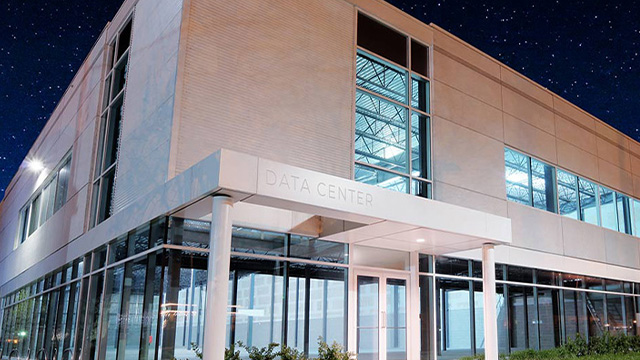
There’s no question artificial intelligence (AI) is the main attraction of next generation technology. Naturally, AI is also the primary driver of data center demand. Add in cloud computing, telecommunications, security, and other vital aspects of IT infrastructure and, clearly, data centers are only becoming more essential across industries.
Building a better steel experience
